
A dark spacetime grid stretches silently across a cosmic void. As a glowing sphere glides through it, the grid bends and ripples around its path, visualizing the curvature of spacetime from Einstein’s General Relativity. Subtle 3D rotation and faint starlight enhance the scene’s depth, revealing gravity as the graceful warping of the universe’s fabric.

Suppose the diameter of aerosol particles in a particular application is uniformly distributed between 2 and 6 nanometers. Find the probability that a randomly measured particle has diameter greater than 3 nanometers.
uniformly distributed aerosol particles between 2 and 6 nanometers
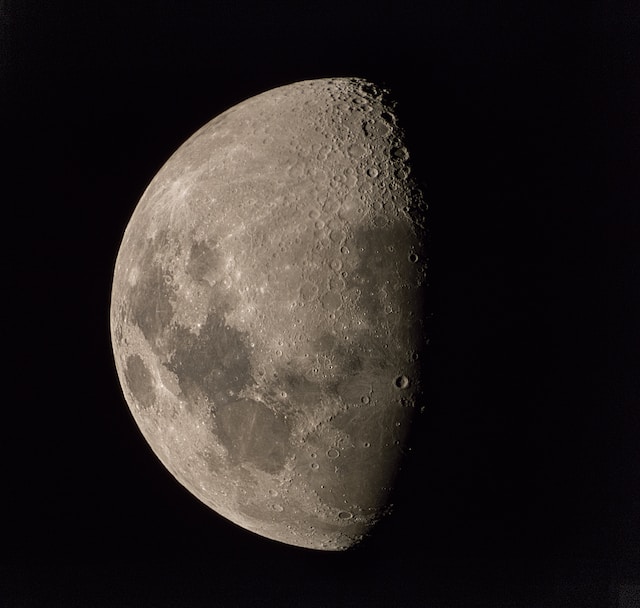
Chandrayaan-3: India’s Lunar Exploration Mission to Discover the Moon’s Composition
In 2008, India embarked on its first lunar exploration mission, Chandrayaan-1, marking a significant milestone in its space endeavors. Following the success of Chandrayaan-1 and the failure of Chandrayaan-2, India announced its plans for Chandrayaan-3, the…

Mastering Probability Theory: A Comprehensive Guide to Random Variable
Probability theory is a fascinating subject that has many applications in the real world. Understanding the basics of random variables and probability distributions is essential for anyone working in a field that deals with uncertainty. By mastering probability theory, you can make better decisions and improve your ability to analyze and interpret data.

Random Phenomena
Information about Random Phenomena

Random Event
A random event refers to an unpredictable occurrence that has no discernible pattern or predetermined outcome. It is an event whose outcome cannot be reliably predicted or determined based on prior information or knowledge. Random events are commonly encountered in…

Practical Examples of Continuous Random Variables
Practical illustrations of Random Variables that we are exposed to in our daily life

Random variables
Random variables are an important concept in probability theory and statistics. A random variable is a variable whose value is determined by the outcome of a random event. In other words, its value is not known beforehand but depends on the outcome of some underlying…

10 Examples of combination reactions
1. The reaction between hydrogen gas and oxygen gas to form water: 2H2 + O2 → 2H2O 2. The reaction between iron and sulfur to form iron sulfide: Fe + S → FeS 3. The reaction between magnesium and oxygen to form magnesium oxide: 2Mg + O2 → 2MgO 4. The reaction between…

The Top 10 Greatest Scientists of all times
The field of science has been enriched by numerous brilliant minds throughout history. Here are some of the greatest scientists who have made significant contributions to their respective fields: Isaac Newton (1643-1727) Considered one of the most influential…

Periodic table
A periodic table is a tabular arrangement of chemical elements organized by their atomic number, electron configuration, and recurring chemical properties. The periodic table is one of the most important tools in chemistry, and it is used by scientists and engineers…